
Researcher Verification
Our compounds are sold strictly For Research Use Only. Please confirm you are 21 or older and tell us about your research capacity.
Our compounds are sold strictly For Research Use Only. Please confirm you are 21 or older and tell us about your research capacity.
Precision starts with understanding. Learn what research peptides are, how they are made and handled, and how to read a certificate of analysis — then go molecule by molecule through the published literature behind each compound.
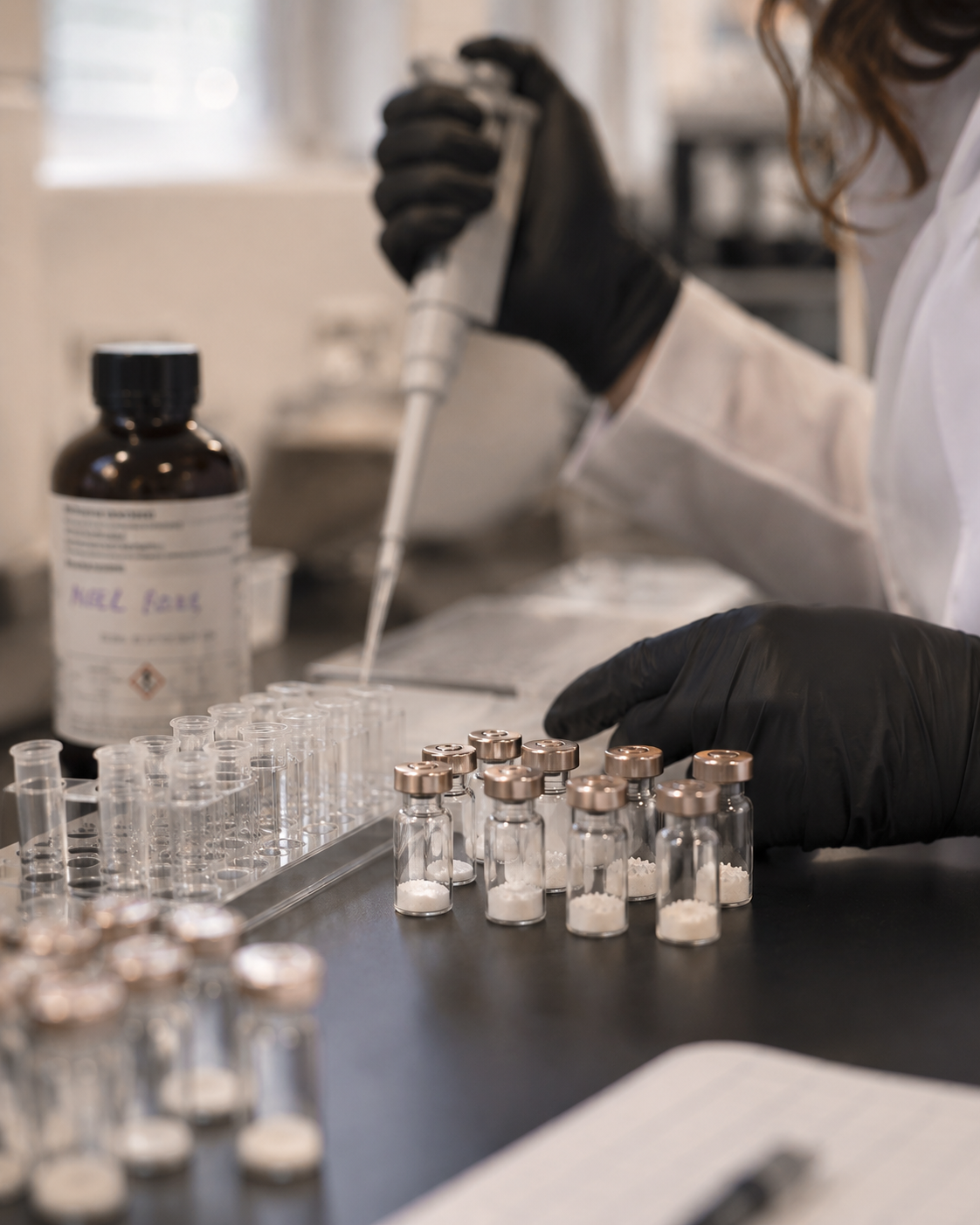
Our role is to supply a well-characterized molecule and tell you where the literature lives. Interpretation stays where it belongs — with the researcher designing the study.
From what a peptide is to how a lot is documented — framed strictly as laboratory reference for qualified researchers. For research use only.

If proteins are the full text, peptides are the sentences. A peptide is a short chain of amino acids — typically fewer than 50 — linked by peptide bonds. In living systems these short chains act as signaling molecules: messengers that help cells start a process, stop one, or hold a balance.
A synthetic research peptide is the same defined sequence, built in a lab to a known specification and supplied as a stable, freeze-dried (lyophilized) powder. That precision — a known sequence, a measured purity, a documented identity — is what makes a peptide a useful research input.
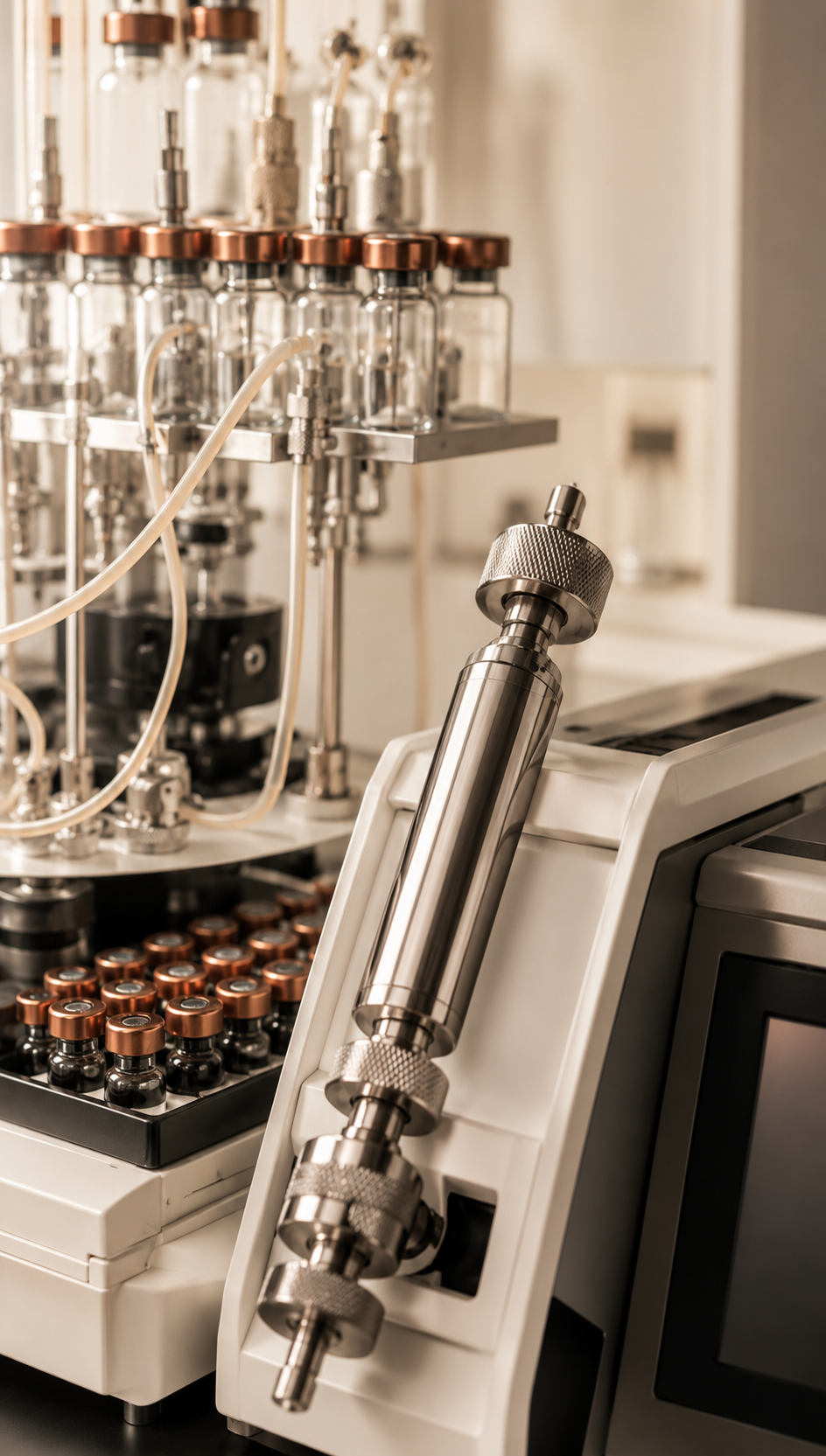
Production follows one disciplined loop: build the chain, clean the product, prove what it is, and document the record. Each step has its own analytical checkpoint.
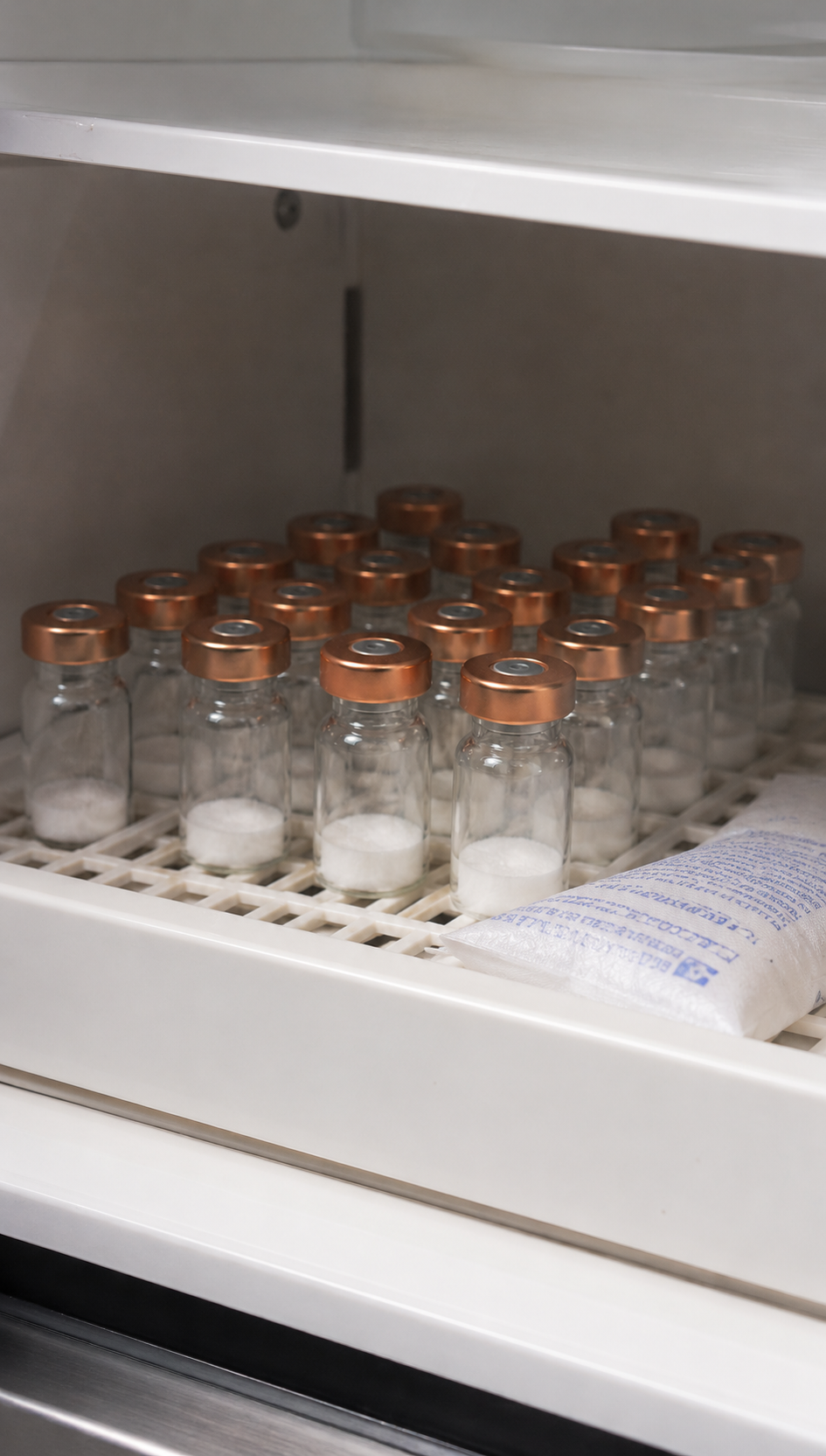
Temperature, moisture, light, and handling all affect how well a peptide holds its structure over time. Lyophilized (dry) material is more stable than material in solution. The single most important rule: follow the product label and certificate of analysis over any general guidance, because conditions vary by compound.
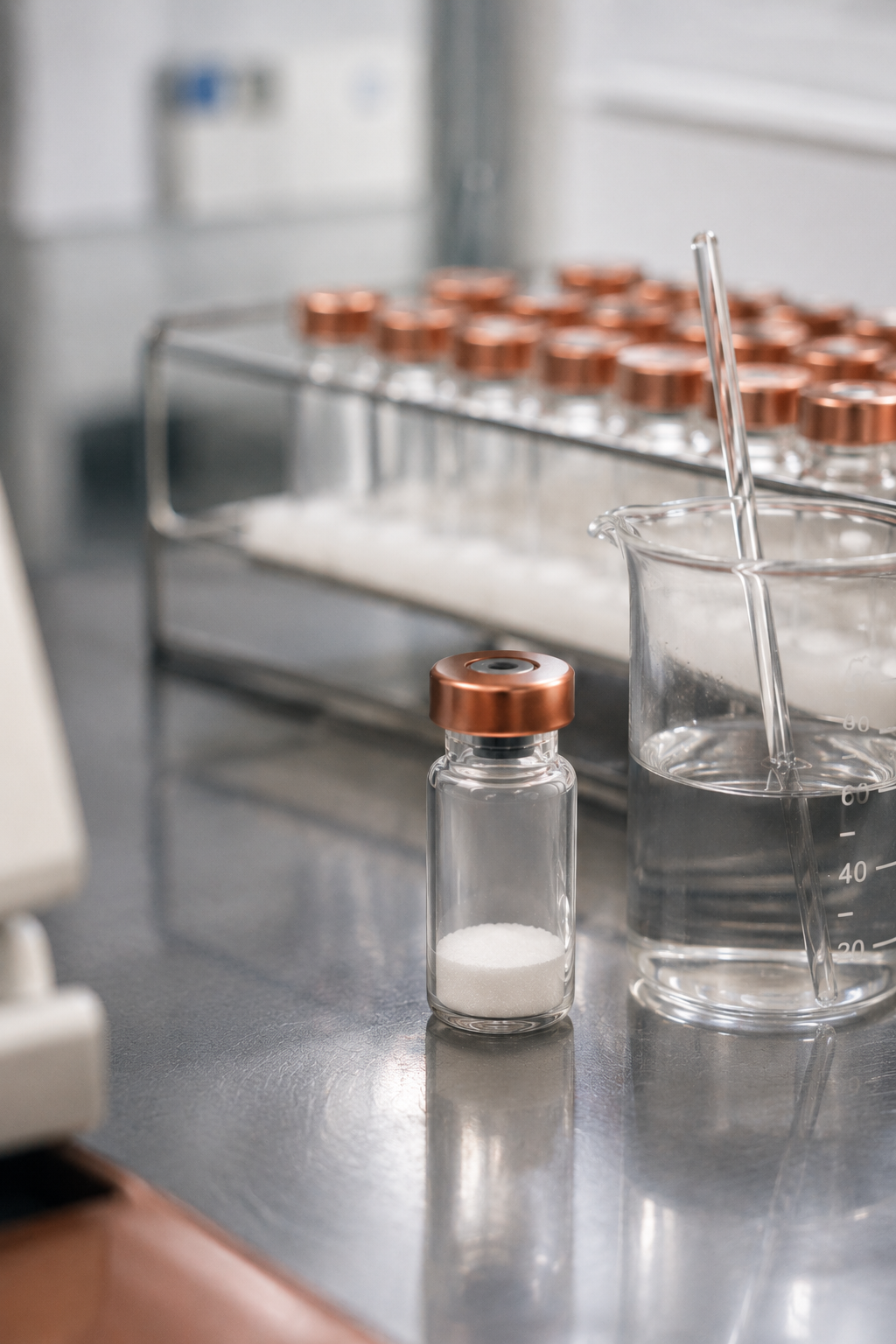
Reconstitution is the laboratory preparation of a lyophilized compound into solution for experimental handling — introducing a compatible diluent to a dry peptide to bring it into solution for research use.
OMNI does not advise on dosing, administration, or personal use. The notes below are laboratory-handling context only, for qualified researchers working in vitro.
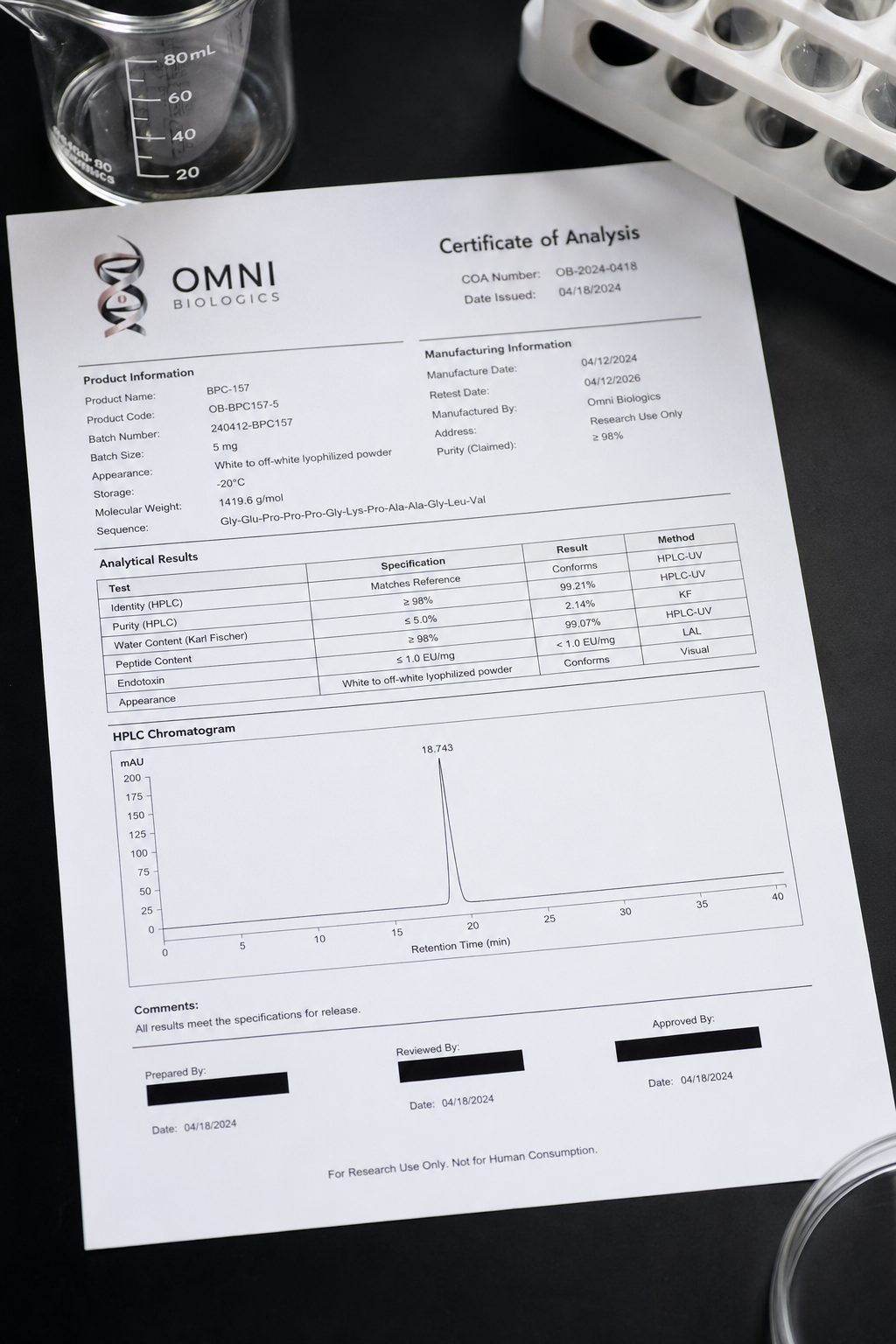
A certificate of analysis is the lab-issued document that verifies a compound's identity, purity, and specifications from analytical testing. Here is what the key fields tell you — and what "good" looks like.
Our catalog is organized by the laboratory field each molecule is studied within. These describe areas of research — not statements about any outcome.
Select a compound to read its molecular identity, neutral research context, and the foundational publications associated with it. Every reference links to the primary record on PubMed.
Synthetic 15-amino-acid peptide (pentadecapeptide; Gly-Glu-Pro-Pro-Pro-Gly-Lys-Pro-Ala-Asp-Asp-Ala-Gly-Leu-Val), a stable partial sequence corresponding to a fragment found in a human gastric juice protein.
Research context. Investigated almost exclusively in preclinical / animal-model systems (predominantly rodent) as a cytoprotection and organoprotection research probe. Reported lines of laboratory study include nitric-oxide (NO) signaling, angiogenesis-associated pathways (e.g. VEGFR2, endothelial signaling), vascular and collateral-flow models, and brain-gut axis model systems.
Foundational literature · 5 referencesCitations reflect independent published research — not claims by OMNI Biologics. Listed to document that a body of peer-reviewed literature exists for this molecule.
Synthetic peptide corresponding to the central actin-binding region of thymosin beta-4 (Tβ4), a naturally occurring water-soluble, heat-stable 43-amino-acid (~5 kDa) polypeptide of the beta-thymosin family; the parent is a monomeric (G-)actin-binding peptide.
Research context. Thymosin beta-4 is studied principally as a G-actin-sequestering peptide that forms a 1:1 complex with monomeric actin, investigated for its influence on the actin monomer-to-polymer balance and cytoskeletal dynamics in cell-based systems, and in preclinical models for endothelial-cell migration / angiogenesis and tissue-repair / fibrosis pathways.
Foundational literature · 6 referencesCitations reflect independent published research — not claims by OMNI Biologics. Listed to document that a body of peer-reviewed literature exists for this molecule.
Copper(II) complex of the tripeptide glycyl-L-histidyl-L-lysine (Gly-His-Lys / GHK), a small three-amino-acid peptide first isolated from human plasma that chelates a Cu(II) ion (a copper-binding metallopeptide).
Research context. Investigated in vitro and in preclinical models characterizing its copper(II)-binding chemistry, association with copper transport, and influence on gene-expression patterns and extracellular-matrix- and antioxidant-related signaling. Common contexts include skin / connective-tissue cell models, wound-healing and angiogenesis model systems (scaffolds, cryogels, hydrogels), tissue-injury / inflammation models, and the observed age-related decline of GHK in human plasma.
Foundational literature · 6 referencesCitations reflect independent published research — not claims by OMNI Biologics. Listed to document that a body of peer-reviewed literature exists for this molecule.
Synthetic heptapeptide Met-Glu-His-Phe-Pro-Gly-Pro; a non-hormonal analog of the ACTH(4-10) / ACTH(4-7) fragment of adrenocorticotropic hormone, extended at the C-terminus with a Pro-Gly-Pro tripeptide.
Research context. Investigated in preclinical (primarily rodent) model systems in the context of central-nervous-system signaling. Reported lines include neurotrophic-factor expression (BDNF / TrkB) at mRNA and protein level, specific peptide binding in forebrain tissue, monoaminergic (dopaminergic, serotoninergic) neurotransmission, and transcriptomic responses in models of cerebral ischemia.
Foundational literature · 5 referencesCitations reflect independent published research — not claims by OMNI Biologics. Listed to document that a body of peer-reviewed literature exists for this molecule.
Synthetic heptapeptide Thr-Lys-Pro-Arg-Pro-Gly-Pro; an analog of the endogenous tetrapeptide tuftsin (Thr-Lys-Pro-Arg, an IgG-heavy-chain fragment) extended at the C-terminus with a Pro-Gly-Pro tripeptide for metabolic stability.
Research context. Investigated in preclinical model systems and cell-culture preparations in the context of central-nervous-system signaling. Reported directions include gene-expression changes related to GABAergic neurotransmission, BDNF expression in hippocampal / cortical tissue, and serotonergic / monoaminergic pathways.
Foundational literature · 5 referencesCitations reflect independent published research — not claims by OMNI Biologics. Listed to document that a body of peer-reviewed literature exists for this molecule.
Synthetic analog of human growth-hormone-releasing factor (GRF / GHRH(1-44)); a 44-amino-acid peptide bearing an N-terminal trans-3-hexenoyl modification that increases stability relative to native GRF.
Research context. Characterized in the literature as a growth-hormone-releasing-factor analog; the published record studies the growth-hormone / IGF-1 axis and visceral-adipose and metabolic parameters within controlled pharmacology and clinical investigations. Provided for reference only; OMNI's product is not represented as the approved drug or as for human or veterinary use.
Foundational literature · 6 referencesCitations reflect independent published research — not claims by OMNI Biologics. Listed to document that a body of peer-reviewed literature exists for this molecule.
A 28-amino-acid, N-terminally acetylated, highly acidic thymic polypeptide (Ac-SDAAVDTSSEITTKDLKEKKEVVEEAEN) derived from the precursor prothymosin alpha; MW ~3108 Da.
Research context. Literature characterizes the primary sequence and solution conformation and studies interactions with innate- and adaptive-immune signaling pathways (e.g. Toll-like-receptor / MyD88, NF-κB, p38 MAPK) in cell-line, dendritic-cell, and T-lymphocyte model systems, examining differentiation markers and cytokine signaling as research endpoints.
Foundational literature · 5 referencesCitations reflect independent published research — not claims by OMNI Biologics. Listed to document that a body of peer-reviewed literature exists for this molecule.
Synthetic tetrapeptide Ala-Glu-Asp-Gly (AEDG); a synthetic analog of the pineal-gland peptide preparation epithalamin.
Research context. Investigated in laboratory / preclinical models in the context of telomere biology and telomerase / hTERT gene expression in cultured human cell lines, pineal / neuroendocrine signaling, and gene-expression / chromatin (epigenetic) regulation, including interactions with histone proteins and ribosomal-gene / chromatin activity in cultured cells.
Foundational literature · 5 referencesCitations reflect independent published research — not claims by OMNI Biologics. Listed to document that a body of peer-reviewed literature exists for this molecule.
Nicotinamide adenine dinucleotide (NAD+), a pyridine dinucleotide coenzyme composed of two nucleotides (nicotinamide-bearing and adenine-bearing ribonucleotides) joined by a phosphate bridge. A small-molecule coenzyme, not a peptide.
Research context. Studied as a central cofactor in cellular redox metabolism (the NAD+/NADH couple in glycolysis, the TCA cycle, oxidative phosphorylation) and as a co-substrate of enzyme families including sirtuins and PARPs. Reviews characterize its biosynthesis / salvage pathways (de novo, Preiss-Handler, salvage via NMN / NR precursors) and examine NAD+ availability in relation to mitochondrial bioenergetics and genome-maintenance signaling in cultured-cell and animal models.
Foundational literature · 5 referencesCitations reflect independent published research — not claims by OMNI Biologics. Listed to document that a body of peer-reviewed literature exists for this molecule.
A 16-amino-acid mitochondrial-derived peptide encoded within an open reading frame of the mitochondrial 12S rRNA.
Research context. Characterized in laboratory / preclinical models in the context of AMPK signaling, folate / one-carbon (purine-biosynthesis) metabolism, and mitochondrial bioenergetics as a framework for studying metabolic homeostasis. Investigators have studied its stress-responsive nuclear translocation and association with antioxidant-response-element (ARE) gene regulation in cultured cells, plus exercise / metabolic physiology and age-dependent changes in rodent skeletal-muscle models.
Foundational literature · 5 referencesCitations reflect independent published research — not claims by OMNI Biologics. Listed to document that a body of peer-reviewed literature exists for this molecule.
The shared vocabulary of peptide research — preparation, characterization, and study context, in plain language.